
La révolution carbone négatif : comment le biochar transforme l’agriculture moderne
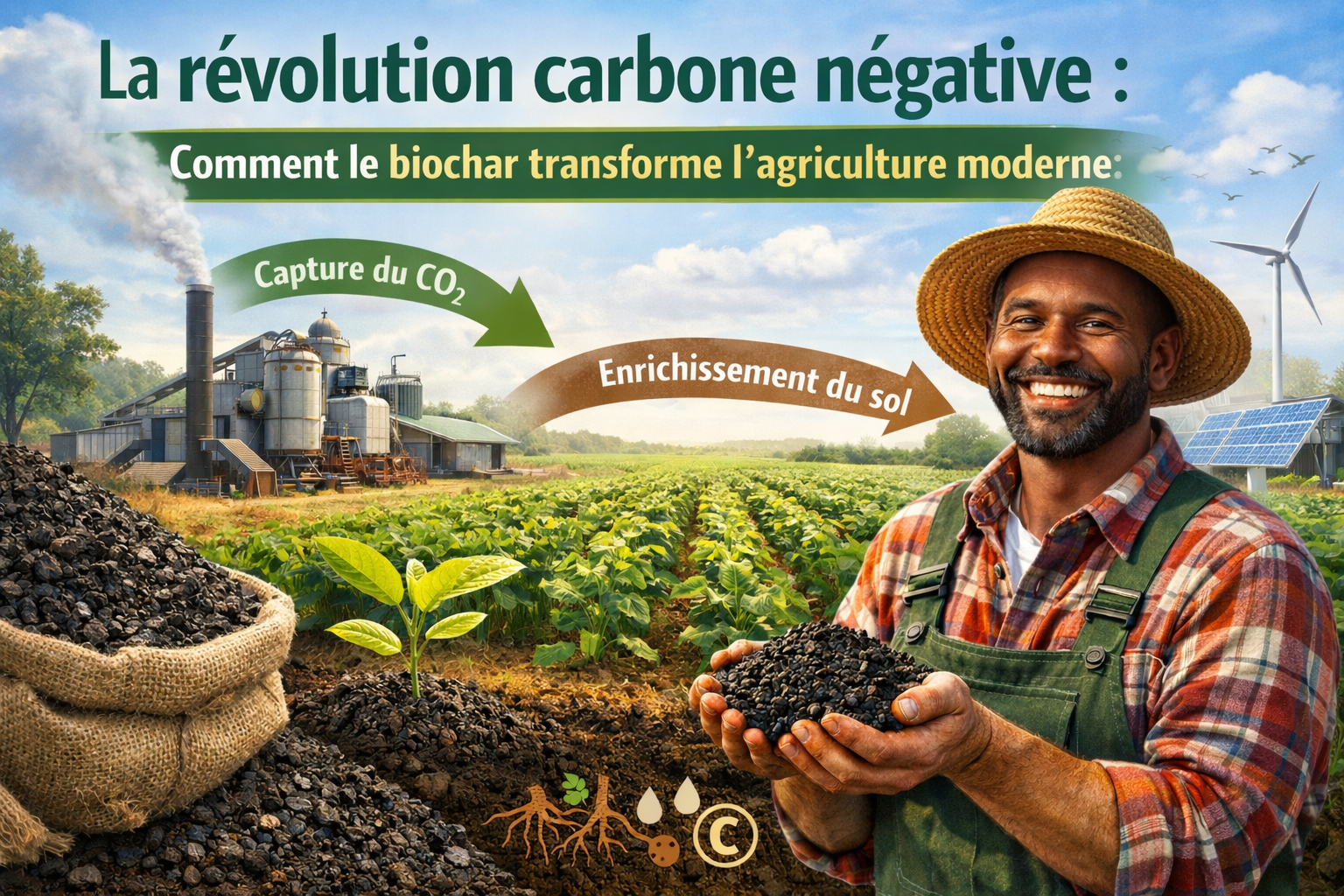
At a time when climate change and land degradation threaten global food security, farmers and environmental stewards are looking for solutions that don't force them to choose between productivity and sustainability. Meet biochar: an ancient soil amendment that turns out to be one of the most powerful tools in modern agriculture.
At FORCHAR, we have witnessed how this remarkable material is transforming farms across Quebec and beyond, converting agricultural residue into a carbon negative solution that improves soil health, increases yields and actively fights climate change.
What Makes Biochar Different
Unlike traditional fertilizers that provide a temporary nutrient boost, biochar creates a lasting change in the structure and function of your soil. Produced by pyrolysis — the heating of organic materials like wood chips, crop residues or agricultural waste in the absence of oxygen — biochar is a stable form of carbon that can remain in the soil for hundreds or even thousands of years.
This stability is what makes biochar truly revolutionary. When organic matter decomposes naturally, it releases carbon dioxide into the atmosphere. But when that same material is converted to biochar, the carbon becomes trapped in a stable form. Apply it to your fields, and you're not just improving your soil — you're actively removing carbon from the atmosphere.
The benefits observed by farmers
The agricultural benefits of biochar extend far beyond carbon sequestration. Farmers who incorporate biochar into their soil management practices report remarkable improvements in water retention, especially crucial during periods of drought. The porous structure of biochar acts like a sponge, retaining moisture and nutrients in the root zone where plants need them most.
Nutrient efficiency is also seeing dramatic improvements. Biochar's unique structure prevents valuable nutrients from washing away with rain or irrigation, meaning your fertilizer investments stay where they belong — feeding your crops, not running off into waterways. Many farmers find that they can reduce their fertilizer applications while maintaining or even increasing their yields.
Soil microbiology thrives in soils amended with biochar. The porous structure of the material provides an ideal habitat for beneficial microorganisms, creating a thriving underground ecosystem that supports plant health naturally. This biological activity improves nutrient cycling, disease resistance and overall soil vitality.
Beyond agriculture: the energy advantage
What many people don't realize is that biochar production isn't just about the charcoal itself. The pyrolysis process generates syngas — a clean, renewable energy source that can power operations, heat buildings or generate electricity. At FORCHAR, our pyrolysis systems are designed to capture and utilize this syngas, creating a closed-loop system that is energy self-sufficient.
This dual production transforms waste management into resource generation. Agricultural residues, forestry byproducts and other organic materials that would otherwise be burned in open piles or left to decompose become valuable inputs for both soil health and energy production.
A solution for our times
As we face the dual challenges of feeding a growing population and combating climate change, biochar stands out as one of the few solutions that tackles both problems simultaneously. It's not a silver bullet — no technology is — but it's a powerful tool that's available now, proven effective, and can scale on farms of all sizes.
The beauty of biochar is in its simplicity. We take materials that farms already produce, we process them in a way that captures carbon and creates value, and we return that value to the soil where it continues to work for years. This is circular economy thinking at its best.
Getting started with biochar
For farmers considering biochar, the key is to start with a clear understanding of the current condition of your soil and your specific goals. Biochar is not a one-size-fits-all solution — application rates, particle sizes and integration methods vary depending on soil type, climate and crops.
Many farms start with small test plots to observe the effects first-hand before expanding to larger areas. This approach allows you to fine-tune your biochar strategy while building confidence in the results.
Looking to the future
The biochar industry is still young, but it is growing rapidly as more farmers, researchers and policymakers recognize its potential. Carbon markets are beginning to value the carbon sequestration benefits of biochar, creating new revenue streams for early adopters. Research continues to reveal new benefits and best practices for different agricultural contexts.
At FORCHAR, we are committed to making biochar accessible to Canadian farmers while maintaining the highest standards of quality and environmental responsibility. Our locally produced biochar ensures that the carbon footprint of production and transport remains minimal, maximizing the climate benefits of each application.
The path to regenerative agriculture does not require giving up productivity or profitability. With tools like biochar, we can build soil health, increase resilience, and contribute to climate solutions — all while growing the food our communities need.